
New High Performance KELLER Cell for EV and Energy Storage with 5000+ Cycles


New High Performance KELLER Cell for EV and Energy Storage with 5000+ Cycles
Pickup currently not available
SPECIFICATIONS
After-Sales Support: 12 Months
Applications: Energy Storage System, Electric Vehicles
Brand Name: Keller
Condition: New
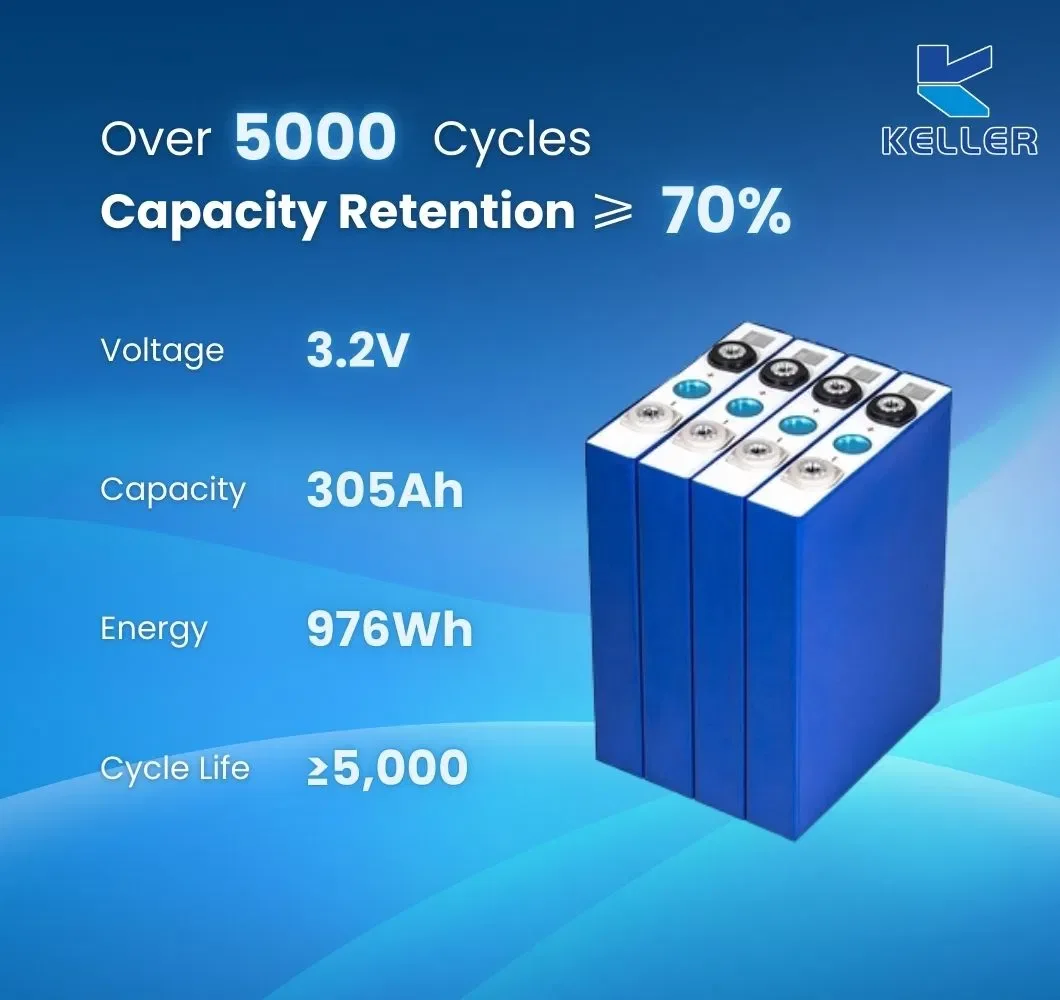
Cycle Life: ≥5000 Cycles (70% Capacity Retention)
Place of Origin: China
Product Name: Cell
Purpose: for replace/repair
Rechargeable: Yes
Size: Medium
Trademark: KELLER
Transport Package: Carton
Weight: 5.55kg
Product Description
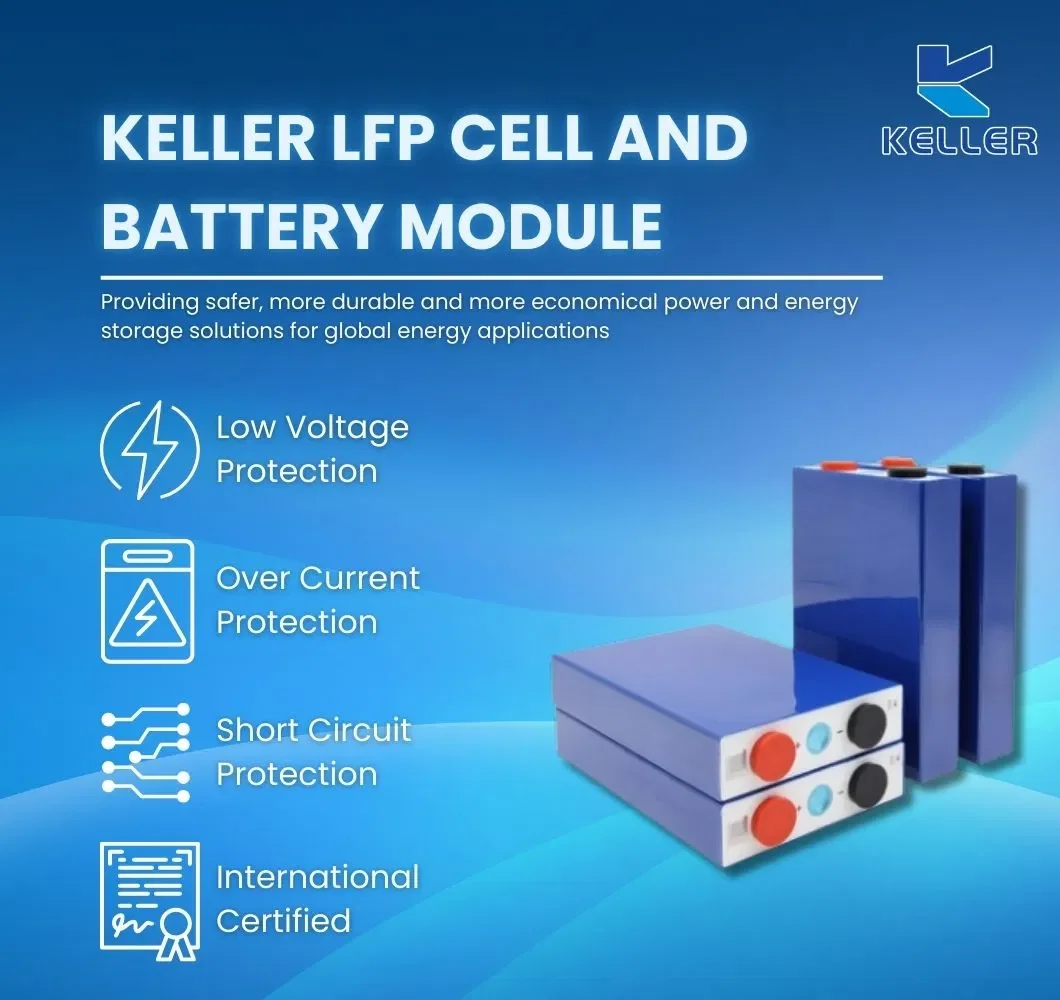
| Parameter | Specification |
| Product Name | Cell |
| Nominal Voltage | 3.2V |
| Nominal Capacity | 305Ah |
| Nominal Energy | 976Wh |
| Max Continuous Charge Current | 153A |
| Max Continuous Discharge Current | 305A |
| Max Pulse Discharge Current | 610A (30s) |
| Cycle Life | ≥5000 cycles (70% capacity retention) |
| Operating Temperature (Charge) | 0ºC ~ +60ºC |
| Operating Temperature (Discharge) | -30ºC ~ +60ºC |
| Storage Temperature | -30ºC ~ +60ºC |
| Weight | 5.55kg |
| Applications | Energy storage system, Electric vehicles, Solar storage, UPS, Grid balancing |



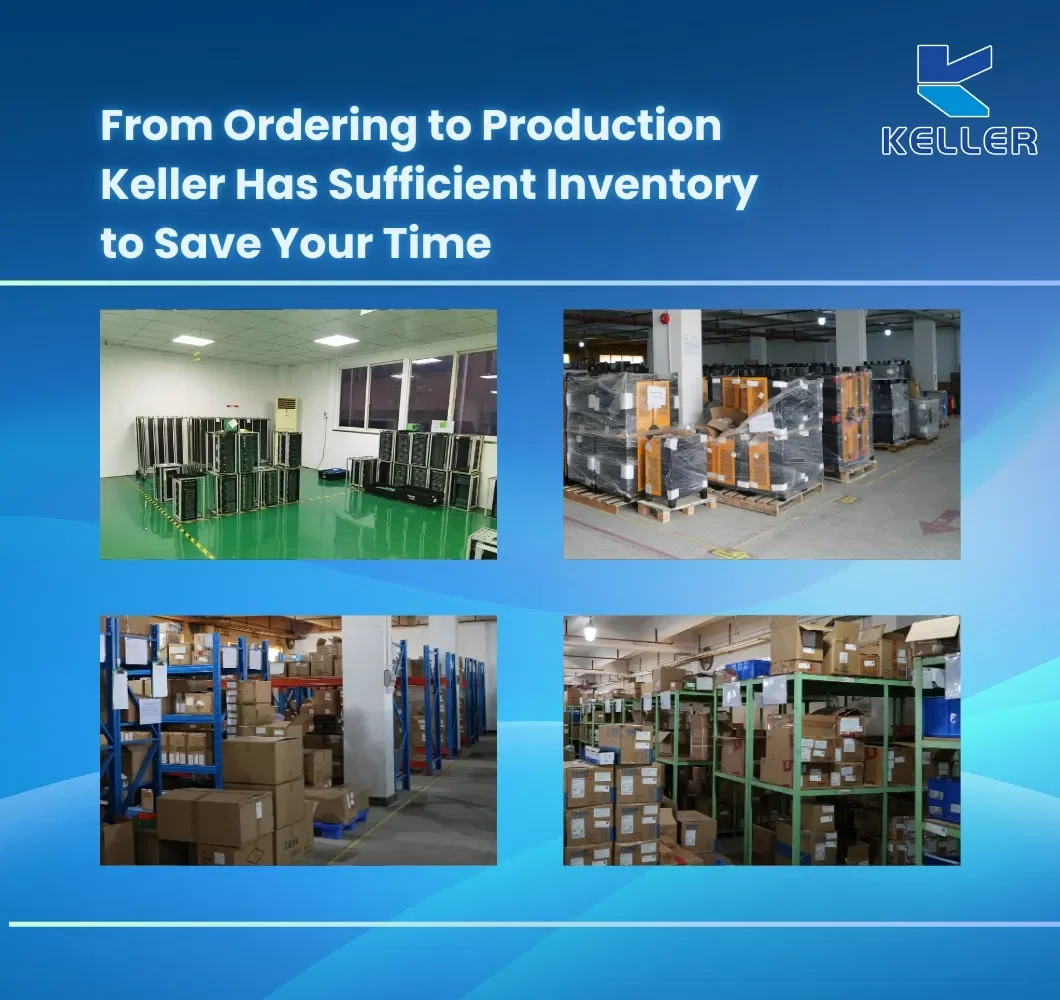


| Packing Method: | Delivery Method: |
| 1. Foam+ Box+ Carton+ Wooden frame. | By air, sea or land according to customer's choice. |
| 2. Foam + Color box + Carton. | |
| 3. As per clients require. | Loading Port: |
| Shanghai port or other port you want. | |
| Shipping Time: | |
| About 15-30 days for small quantity. | Guarantee: |
| About 45-60 days for large quantity. | 1 Year. |
Q: Does this LFP battery cell support fast charging? What is the maximum charging current?
A:Standard charging: 0.5C (153A)
Maximum continuous charging current: 153A (0.5C)
Charging current limits at different temperatures:
0~10°C: Max 0.1C (30.5A)
10~20°C: Max 0.2C (61A)
20~45°C: Max 0.5C (153A)
<0°C or >60°C: Charging prohibited
Q: How is the discharge performance? Can it be used in low-temperature environments?
A:Maximum continuous discharge current: 305A (1C)
Maximum pulse discharge current: 610A (for 30 seconds)
Low-temperature performance:
-20°C: Discharge capacity ≥70% (153A discharge to 2.0V)
Below -30°C: Not recommended as it may affect performance and lifespan
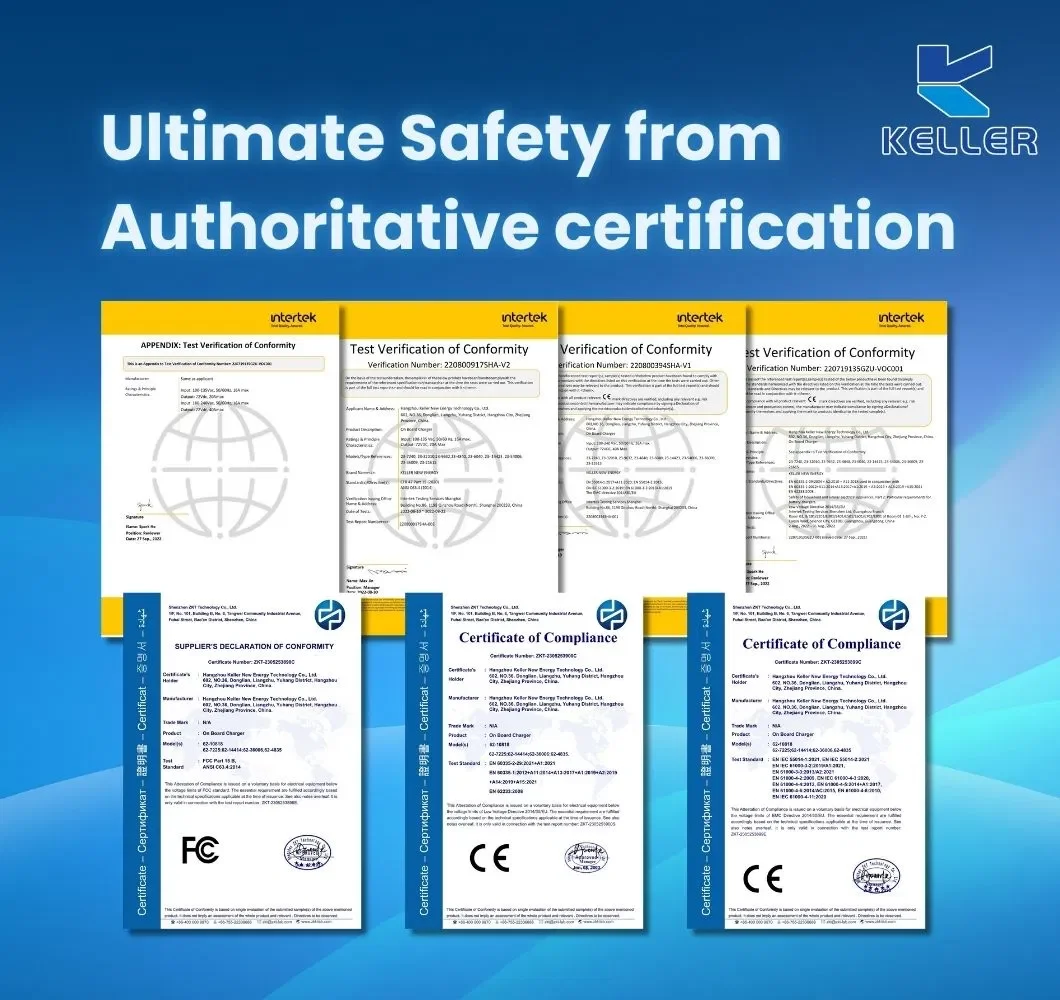
Q: How about the safety performance of this battery cell?
A:Passed multiple safety tests, including:
Overcharge (1.5x voltage), over-discharge (0V), short circuit (<5mΩ for 10 minutes) - No fire, no explosion.
Crush test (30% deformation or 13KN pressure), drop test (1.5m height) - Passed safely.
Thermal runaway test (heated to 130°C) - No fire, no explosion.
Q: What should be noted during storage?
A:Short-term storage (<1 month): -30°C to +55°C, humidity ≤90%RH
Long-term storage (>3 months): -10°C to +45°C, humidity ≤90%RH
SOC state: For long-term storage, maintain 30%~50% SOC and recharge every 6 months.
Q: What should I do if the battery leaks or overheats?
A:If electrolyte contacts skin/eyes: Immediately rinse with plenty of water for 15 minutes and seek medical attention.
If the battery overheats, deforms, or emits odor: Stop use immediately, keep away from flammable materials, and place in a well-ventilated area.
Never short-circuit, disassemble, or incinerate the battery to avoid secondary hazards.